English

















































































































































































































The Wow! Signal – A Cosmic Mystery That Still Captivates

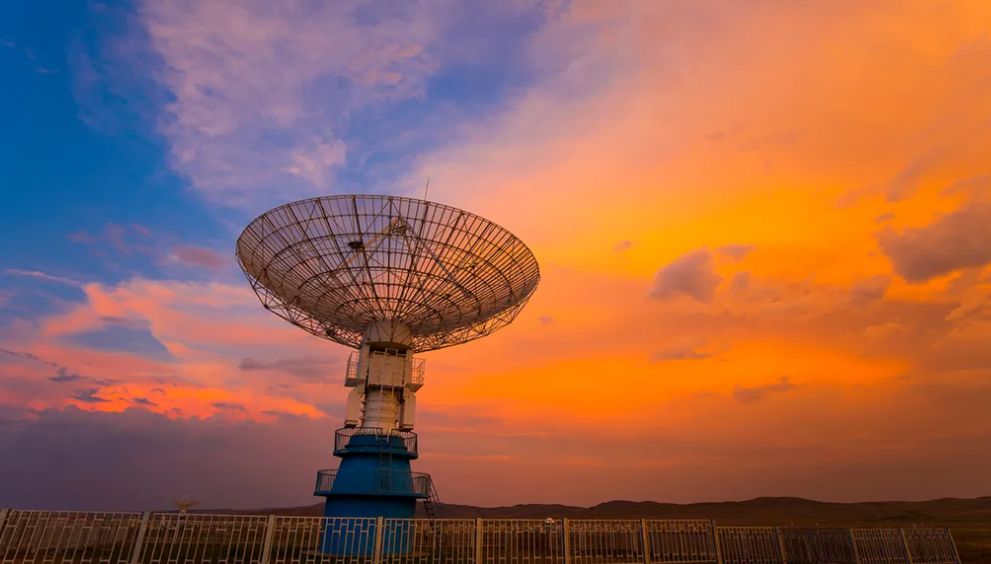
On the night of August 15, 1977, at precisely 10:16 PM Eastern Time, something extraordinary happened. The Big Ear radio telescope in Ohio picked up a brief but powerful signal that would go down as one of the most intriguing mysteries in the search for extraterrestrial intelligence.
Several days later, astronomer Jerry Ehman was sorting through data printouts when he noticed an unusual sequence of alphanumeric characters: 6EQUJ5. It represented a signal far stronger than the usual background noise—so astonishing that Ehman circled it in red pen and simply wrote one word in the margin: “Wow!” That handwritten note would give the signal its enduring nickname and spark decades of speculation about whether humanity had just overheard a message from the stars.
The Telescope That Made History
The Big Ear Radio Observatory, operated by Ohio State University, didn’t look like the classic bowl-shaped radio telescopes you might imagine. Instead, it resembled a massive metallic field the size of three football stadiums, made of aluminum over concrete, with tall wire mesh walls at either end.
This innovative “Kraus-type” design—developed by Professor John D. Kraus—relied on a flat, tiltable reflector that bounced radio waves toward a fixed parabolic surface, which then focused them into sensitive ground-based receivers.
From 1973 to 1995, Big Ear hosted the world’s longest continuously running SETI (Search for Extraterrestrial Intelligence) program, scanning the skies as the Earth’s rotation naturally shifted its field of view. Each patch of sky was observed for exactly 72 seconds as it passed through the telescope’s beam.
Jerry Ehman’s Astonishing Find
By 1977, Jerry Ehman was volunteering at Big Ear due to the loss of his research funding. His job was to review the long rolls of printed data from the telescope. Signals were coded so that numbers represented intensities just above background noise, while letters indicated much stronger readings.
When Ehman spotted 6EQUJ5, he instantly recognized the sequence as extraordinary. It represented a burst roughly 30 times stronger than background noise—by far the strongest unusual signal they’d seen.
Why the Wow! Signal Stood Out
The Wow! Signal had several striking features that made it so intriguing to scientists:
- Near-Perfect Frequency: It was detected at about 1420.4556 MHz, remarkably close to the natural 21 cm hydrogen line. Since hydrogen is the universe’s most abundant element, scientists had long theorized this frequency would be a natural choice for interstellar communication.
- Narrow Bandwidth: The emission fell within a bandwidth under 10 kHz—unlike the broad emissions from most natural cosmic sources. Narrowband signals are typically associated with artificial origins.
- Exactly 72 Seconds Long: The signal lasted for just the time Big Ear could “see” that point in the sky—rising, peaking, and fading exactly as a fixed celestial source would appear in the telescope’s beam.
- One-Beam Hit: Big Ear had two feed horns, each sweeping the same section of sky in quick succession. The signal appeared in only one feed, suggesting the source was brief or transient.
- Never Repeated: Despite countless follow-up scans by Big Ear and other observatories worldwide, the Wow! Signal was never heard again.
Decades of Theories—From the Mundane to the Extraordinary
Since 1977, scientists have proposed many explanations:
- Earth-Based Interference: Signals from TV transmissions, radar, or spy satellites were considered, but the signal’s frequency falls within a protected radio astronomy band—making interference unlikely.
- Comets: In 2016, some researchers proposed that two comets in the area may have emitted hydrogen signals. This theory was later criticized, as astronomers had never observed comets producing such strong signals before or since.
- Reflections from Satellites or Space Debris: Some suggested the signal was an Earth-based broadcast reflected by an orbiting object. Jerry Ehman himself once considered this but found no evidence.
- Intelligent Origin: Given its characteristics, many in the SETI community saw it as a textbook example of what a deliberate extraterrestrial signal might look like.
A Breakthrough in 2024 – The Hydrogen Cloud Hypothesis
After nearly half a century, new research led by Abel Méndez at the University of Puerto Rico offered a fascinating possibility. Using archived data from the now-collapsed Arecibo Observatory, his team found faint, similar signals near the hydrogen line recorded between February and May 2020.
These weak but distinct signals—50 to 100 times fainter than the Wow! Signal—shared its narrow bandwidth and duration, and they matched the positions of cold hydrogen clouds scattered throughout our galaxy.
How It Might Have Happened
The team proposed that the Wow! Signal could have been caused by:
- Cold Hydrogen Clouds: Vast, frigid regions of space where neutral hydrogen emits faint signals at the 21 cm wavelength.
- Magnetar Flares: Magnetars—neutron stars with unimaginably strong magnetic fields—can unleash powerful bursts of high-energy radiation.
- Stimulated Emission: If a magnetar flare strikes a hydrogen cloud, it can cause the atoms to emit a sudden, intense burst of radio waves—similar to how a maser works.
- Perfect Alignment: For the signal to reach Earth so powerfully, the magnetar, hydrogen cloud, and our planet had to be aligned just right. Such perfect conditions explain why the event has never been repeated.
Why This Explanation Fits
This hypothesis accounts for everything:
- Frequency: Derived from natural hydrogen emissions.
- Intensity: Stimulated emission can temporarily amplify signals dramatically.
- Duration: The effect would last as long as the flare illuminated the cloud.
- Narrowband Nature: Hydrogen’s natural emission line is inherently narrow.
- One-Time Event: The precise alignment was fleeting.
If correct, this would be the first recognized natural hydrogen maser in astronomy—an exciting astrophysical find in its own right.
Science in Action
The Wow! Signal’s story is a testament to the scientific process: a mysterious observation, decades of careful speculation, and the development of new hypotheses based on fresh data. Jerry Ehman himself always stressed caution, famously saying he preferred not to “draw vast conclusions from half-vast data.”
The hydrogen cloud hypothesis didn’t emerge from guesswork—it was driven by finding similar, weaker signals in real observations and building a model to explain both past and present data.
What’s Next for the Research
The team is pursuing several avenues:
- Scouring more archives for other hydrogen-line brightenings.
- Using advanced telescopes like the Very Large Array to pinpoint possible magnetar locations.
- Monitoring hydrogen regions for new transient bursts.
- Refining theoretical models of magnetar-induced masers.
The Legacy of the Wow! Signal
Regardless of its true origin, the Wow! Signal has left an unforgettable mark. It fueled decades of SETI work, inspired scientists and dreamers alike, and reminded us that the cosmos still holds surprises we barely understand.
Even if it wasn’t a call from alien intelligence, it’s a perfect example of how strange natural phenomena can mimic artificial signals. This knowledge helps scientists refine search strategies and avoid false positives in the hunt for extraterrestrial life.
Big Ear was dismantled in 1998 to make way for a golf course, but its most famous detection endures—an enduring spark in humanity’s quest to answer the age-old question: Are we alone?
Perhaps the Wow! Signal’s greatest gift was teaching us another truth: the universe is far more mysterious, complex, and astonishing than we can imagine.